
Your Tesla Model Y Just Arrived. Here’s What to Set Up Before You Do Anything Else
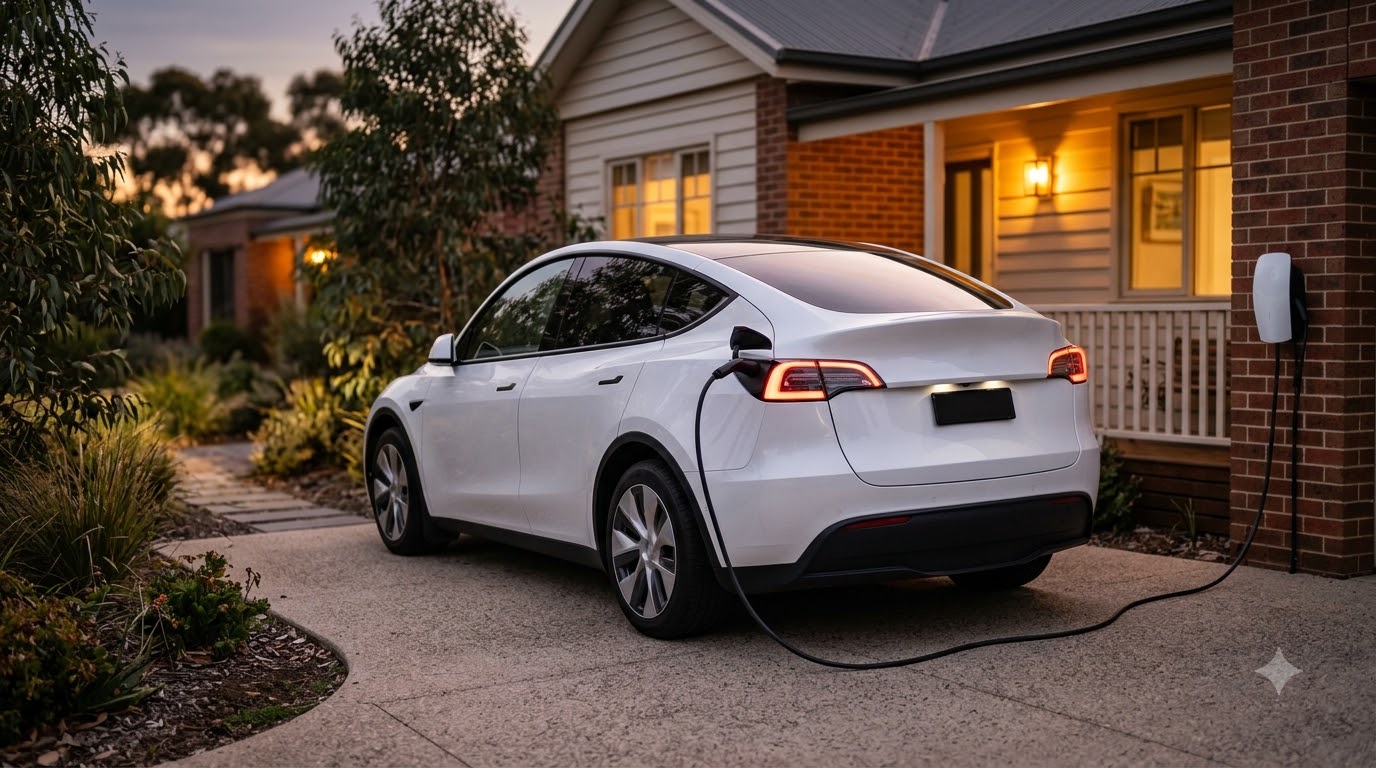
Owning a Tesla is easy. Setting one up properly in the first few weeks is where most new owners either get it right or spend the next year fixing avoidable mistakes — a charging setup that’s too slow for daily use, a frunk that’s already stained, or a screen protector bought for the wrong trim.
This guide covers the four things worth sorting early: charging, storage, interior protection, and cleaning. It’s written around how Model Y actually gets used in Australia — our plugs, our climate, our roads — not a US checklist with the units swapped.
For home charging, know that Australian household outlets (10A/15A) charge far slower than the NEMA outlets referenced in US guides — a Wall Connector is the only realistic daily-driver solution for most owners. The 117-litre frunk has a drain plug and can double as a cooler, but needs a liner before you use it for anything else. Protect the frunk, boot, and centre console early — Tesla’s minimalist storage means everything sits in open, unlined tubs by default. Skip ammonia and alcohol-based cleaners on the touchscreen and vegan leather; they degrade the coatings faster than most owners realise.
What Should You Set Up First on a New Model Y?
Charging comes first, because it’s the one thing you can’t put off — you’ll need to charge within days regardless of what else you’ve sorted. After that, storage and interior protection matter more the sooner you handle them, since spills and scuffs happen fastest in the first few weeks while you’re still learning where everything goes.
What Are the Best Charging Accessories for a Model Y in Australia?
This is where most online guides fail Australian owners completely. If you’ve read a US-written setup guide, forget the NEMA plug numbers — Australian homes don’t have NEMA outlets. We use 10A and 15A flat three-pin plugs, and that distinction changes everything about your home charging speed.
Wall Connector (recommended for most owners). Tesla’s Wall Connector is the realistic daily-charging solution here. On a single-phase 32A circuit it adds up to roughly 50km of range per hour; on a three-phase 16A supply, up to about 75km per hour. It needs professional hardwired installation, typically costing $1,150–$1,450 including hardware.
Mobile Connector. Don’t assume this comes with your car — Tesla has removed the Mobile Connector as standard equipment on Model 3 and Model Y, and whether yours includes one depends on your specific order. On a standard Australian 10A household plug, expect roughly 10–12km of range added per hour. With a 15A outlet and adapter, that improves to around 15–17km per hour — usable as a backup, not a primary solution if you drive daily.
Third-party home chargers. Options like the Evnex E2 Core or Wallbox Pulsar Plus support Type 2 charging at 7.4kW and connect via the CCS2 port, often at a lower installed price than Tesla’s own Wall Connector — worth comparing if you don’t need Tesla app integration for scheduling.
Should You Buy a Wall Connector or Just Use the Mobile Connector?
Buy the Wall Connector if you drive more than about 40km a day and want to charge overnight without thinking about it — the Mobile Connector on a household outlet simply can’t keep up with regular daily use. Use the Mobile Connector as a genuinely useful backup for travel, camping, or emergencies, not as your everyday setup.
What Storage Solutions Does the Model Y Actually Need?
Tesla’s interior is famous for its minimalist design, which looks great and creates almost no built-in organisation. The frunk, boot, centre console, and door pockets are all just open tubs — functional, but not set up to keep small items in place.
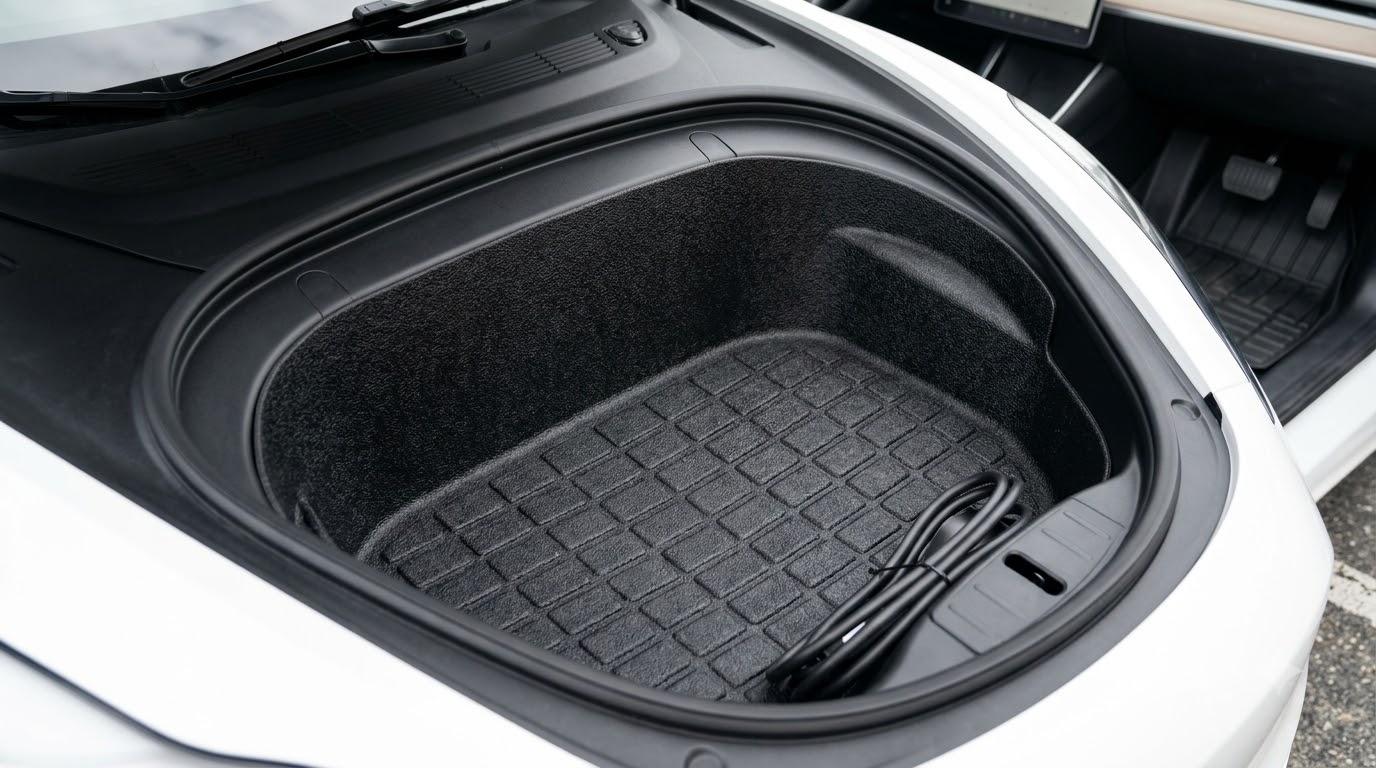
- Frunk organiser. The frunk offers 117 litres of space but is one large open compartment, which means loose items slide around on Australian roads. A divided organiser turns it into usable, sectioned storage.
- Under-seat storage. The space beneath the front seats is unused by default. A custom-fit drawer-style organiser adds a genuinely useful spot for cables, first-aid kits, or anything you want out of sight but within reach.
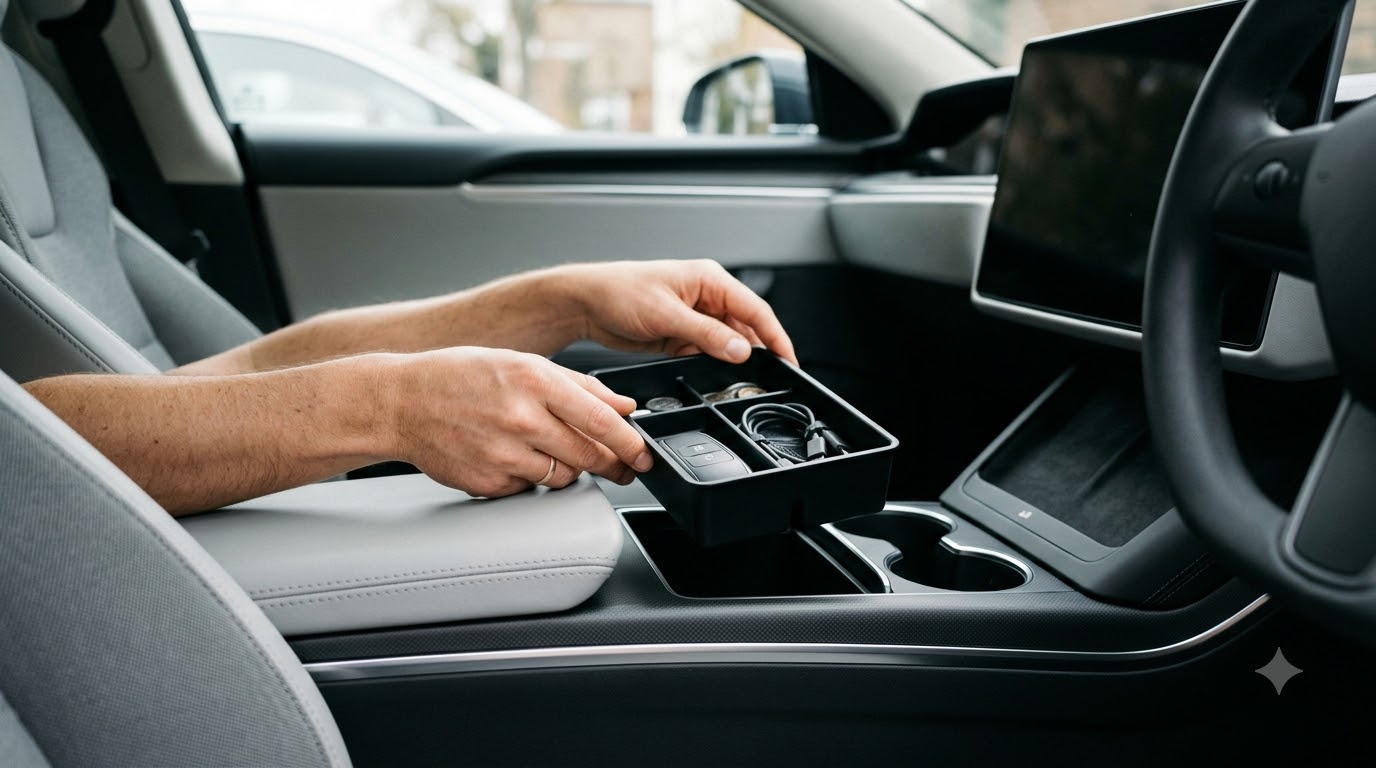
- Centre console tray. The console’s deep void loses small items easily. A tray with cutouts (that don’t block the 12V outlet or sliding cover) keeps keys, sunglasses, and wallets from disappearing.
- Boot-well organiser. The underfloor boot well is easy to forget about but ideal for tools, a tyre repair kit, or emergency gear that doesn’t need daily access.
The frunk has a drainage plug at the bottom, which means it genuinely works as an esky for a day trip — fill it with ice, drink it down, then unplug the drain to empty the water. Just line it first. Direct contact between ice, condensation, and the factory frunk carpet will leave a damp smell that’s a pain to fully air out.
What’s the Best Interior Protection for a Model Y in Australia?
Australian conditions are genuinely harder on car interiors than most of the markets these accessories are designed for — stronger UV, bigger daily temperature swings, and longer average commute distances. Interior protection isn’t optional here the way it might be in a milder climate.
Floor mats. Custom-moulded mats matched to your exact trim and build (Standard vs Premium interior geometry differs) handle mud, sand, and spilled coffee far better than universal-fit mats, which often gap at the edges.
Frunk and boot liners. A moulded liner protects the factory carpet from grocery runs, sports gear, and general use — and unlike the carpet itself, it wipes clean in seconds.
Screen protector. Confirm exact screen dimensions before ordering, since these are trim- and model-specific. A quality protector cuts glare in direct Australian sun and prevents fine scratches from everyday touch use.
Sunshades. Reduces cabin heat buildup and dashboard fading from UV exposure — genuinely more relevant in Australian summer than in most guides written for cooler climates.
What Cleaning Products Are Safe for a Model Y’s Interior?
Here’s where a lot of well-meaning owners cause damage without realising it. Tesla’s vegan leather seats, matte interior trim, and touchscreen all have specific coatings that standard automotive cleaners can strip or dull over time.
Avoid on the touchscreen: ammonia-based glass cleaners (like standard Windex) and alcohol-based wipes — both can degrade the anti-glare coating. Use a microfibre cloth, lightly dampened with water, or a cleaner specifically labelled safe for touchscreens.
Avoid on vegan leather: harsh solvents, bleach-based products, and anything not specifically formulated for synthetic leather. A dedicated vegan-leather cleaner and conditioner keeps the surface from cracking, especially important given Australian UV and heat exposure over summer.
Safe for matte interior trim: a soft microfibre cloth with water or a pH-neutral interior cleaner. Avoid anything with polish or gloss additives — these are formulated for glossy trim and will leave a visible sheen mismatch on matte surfaces.
For the frunk and boot: since these are hard plastic or carpet depending on your liner setup, a standard interior plastic cleaner and a stiff-bristle brush handle most dirt and light stains without issue.
Comparison: Charging Options for Australian Home Use
| Charging option | Speed added | Best for | Approx. cost |
|---|---|---|---|
| Wall Connector (3-phase 16A) | Up to ~75km/h | Daily drivers, fastest home option | $1,150–$1,450 installed |
| Wall Connector (single-phase 32A) | Up to ~50km/h | Daily drivers without 3-phase supply | $1,150–$1,450 installed |
| Mobile Connector (15A outlet) | ~15–17km/h | Light daily use, backup charging | ~$550 + $45 adapter |
| Mobile Connector (10A outlet) | ~10–12km/h | Occasional charging, travel/emergency | ~$550 |
What Mistakes Do New Model Y Owners Commonly Make?
Assuming the Mobile Connector is included. It often isn’t anymore — check your specific order confirmation rather than assuming there’s a charging cable in the boot.
Using the frunk without a liner first. The factory carpet stains and absorbs odours quickly, especially from wet gear, groceries, or the ice-cooler trick.
Cleaning the touchscreen with glass cleaner. Standard household glass cleaners contain ammonia, which degrades the screen’s anti-glare coating over repeated use.
Buying universal-fit accessories. Console organisers and mats not matched to your exact trim commonly interfere with the console’s sliding cover or leave visible gaps.
Underestimating home charging needs. Relying on a household outlet for daily driving works for very low-mileage owners only — most Australian commutes need Wall Connector-level charging speed.
Frequently Asked Questions
What Should You Do Next?
Sort charging first, since it’s the one setup task you genuinely can’t delay. Once that’s handled, tackle storage and interior protection over your first couple of weeks, before daily use has a chance to mark up the factory surfaces. Cleaning habits matter less on day one, but the products you reach for from week one onward determine how the interior looks a year from now.
Set up your Model Y the right way
Shop frunk organisers, floor mats, screen protectors, and cleaning kits built for Australian-spec Model Y trims.
Shop Model Y Accessories